
The System Wide Benefits of Physical Activity
Physical activity positively impacts nearly every system in the body. Regular movement strengthens the heart and lungs, improving oxygen delivery and circulation while reducing the risk of cardiovascular disease. It enhances metabolic function by improving insulin sensitivity, supporting hormone balance, and increasing the body’s ability to efficiently use glucose and fat for energy.
Exercise also strengthens muscles and bones, increases joint stability, and supports long-term mobility. It boosts immune function by improving circulation of immune cells and reducing chronic inflammation. Additionally, physical activity enhances brain function, supports mental health, and improves digestion and overall energy production.
In short, consistent physical activity acts as a full-body regulator and enhancer — improving efficiency, resilience, and long-term health across all major systems.

Physical Activity’s Effects on the Body’s Systems
It helps to understand individual systems throughout the body. The following section describes the functions of the immune, cardiovascular, respiratory, metabolic, digestive, skeletal, endocrine, and muscular systems. We will look at the interworking of these systems, as well as how they are affected by physical activity.
Try This
Each of the following systems has a unique effect on the body and its functions. Physical activity also has an effect on each of these systems. As you move through this section, consider the following questions regarding these body systems and your own wellness journey:
-
How has this system uniquely influenced your wellness?
-
Have you experienced the relationship between physical activity and this system directly? How so?
-
What might you change about your own activity to benefit this system?
Immune Function
The immune system defends our bodies against infections caused by pathogens such as bacteria, viruses, fungi, and parasites. The immune system also recognizes harmful environmental substances and keeps the cells of the body in balance. For instance, some cells in the body become unhealthy, dysfunctional, or even dangerous. In a healthy immune system those damaged cells are identified and removed. When infection occurs, a well-functioning immune system produces specialized cells to rid the body of foreign invaders. Physical activity supports a healthy immune system. Research shows that physical activity is beneficial in the immune response from aging.


Immune Function
Getting Technical
Age-related immune system alterations play a role in the development and progression of diseases such as atherosclerosis, hypertension, chronic heart failure, type 2 diabetes, obesity, arthritis, and chronic obstructive pulmonary disease. Immunosenescence (or immunopause) is the deterioration of the immune system due to aging. The natural inflammatory and immune processes of chronic diseases appear to improve with regular physical activity in aging adults. Regular physical activity has been shown to counteract or at least slow the effects of aging. Though acute and chronic physical activity has been shown to decrease immunosenescence, some researchers believe that the lifetime dose of physical activity has the greatest influence on the strength of our immune response throughout the aging process.
Some people with chronic conditions and immune system disruptions may consider physical activity as too challenging or dangerous. As long as exercise does not exacerbate their symptoms, there is nothing wrong with participating in regular physical movement. In fact, physical activity has been shown to help manage the symptoms and progression of many different types of autoimmune diseases such as multiple sclerosis, rheumatoid arthritis, lupus, inflammatory bowel disease, type 1 diabetes mellitus, fibromyalgia, and systemic sclerosis.

Cardiorespiratory Systems
The cardiorespiratory systems are comprised of two systems: the cardiovascular system and the respiratory system. Their jobs are to circulate blood and move air in and out of the body. Engaging in physical activity increases both our heart rate and respiratory rate. These two systems work in tandem to remove the buildup of carbon dioxide from the body and exchange carbon dioxide for oxygen.
Research positively relates cardiorespiratory health with regular physical activity. Reviews of the differences in physical activity, aerobic exercise, and cardiorespiratory fitness and their effect on cardiovascular health show that more intense bouts of activity provide excellent heart health outcomes (Lavie et al., 2015). Training at high intensities for short bursts followed by lower intensity exercise (or breaks) is called high-intensity interval training (HIIT). In addition to the heart health benefits of HIIT, moderate-intensity continuous training (MICT) is still the most commonly prescribed exercise for individuals with existing heart conditions due to its lower risk, lower discomfort, and sustainability.
Metabolic System
Metabolism is a complex set of processes that convert the substances in our food to energy. Metabolism refers to the sum total of energy created and used in our cells. That energy can be used in many metabolic processes, including the energy for the body to pump blood, breathe, perform brain functions, execute involuntary and voluntary muscular activities, and even break down food via digestion to create more energy.
A vital part of wellness, functioning metabolism relies on digestion to properly process foods into energy and resources, and the circulatory system to deliver glucose and resources to the cells throughout the body.
Recent studies have shown that metabolism does not decrease significantly after the onset of adulthood until older age, with energy expenditure mostly maintained until later life. This goes against conventional wisdom that metabolism slows in the 30s and 40s. Clients believing that metabolism slows in middle age may feel they can be less active or have other self-limiting beliefs about their potential to build wellness. Support them in challenging these beliefs with the understanding that physical activity and healthful nutrition improve metabolic health.


Metabolic System
Getting Technical
You may encounter clients who have developed metabolism-related disease and dysfunction. As with any client’s medical condition, you will want to research the relevant information to ensure your guidance is consistent with current research.
Metabolic syndrome is a condition characterized by a group of reversible risk factors for cardiovascular disease and type 2 diabetes (Han & Lean, 2016). Guidelines define metabolic syndrome as having three or more of the following traits:
-
Waist measuring 40+ inches in men and 35+ inches in women
-
High blood pressure (≥ 130/85 mmHg)
-
High triglycerides (≥ 150 mg/dl)
-
HDL cholesterol < 40 mg/dl in men and < 50 mg/dl in women
-
Elevated fasting blood sugar (≥ 100 mg/dl)
-
Metabolic syndrome is strongly linked to environment and lifestyle choices, including physical inactivity, diets high in saturated fats, soft drinks and other sugar-sweetened beverages.
Type 2 diabetes mellitus and metabolic syndrome are strongly related (Grundy, 2016). Type 2 diabetes is a disease of insulin resistance and carbohydrate storage issues causing the blood to maintain high levels of glucose, which then crystalize on the blood’s hemoglobin molecules. As this disease progresses, it can lead to a lack of insulin production.
Insulin is a hormone that works as a key to allow blood glucose (sugar) to be absorbed and stored in skeletal muscle. When the body becomes resistant to insulin, the beta cells of the pancreas (where insulin is produced) need to produce higher and higher levels of insulin to overcome the resistance. Eventually, the pancreatic beta cells can become fatigued and fail to produce adequate levels of insulin. Physical activity is a powerful intervention for Type 2 diabetes and metabolic syndrome.
Prediabetes is a clinical diagnosis where the individual is on the verge of developing Type 2 diabetes. Physical activity has been demonstrably significant in helping regulate signs and symptoms of Type 2 diabetes and is prescribed as a primary intervention for those who are diagnosed as prediabetic to reverse or delay Type 2 diabetes (Hordern et al., 2012).

Respiratory System
The muscles and mechanisms of respiration directly benefit from physical activity. The diaphragm is a large muscle below the lungs, spanning the bottom of the rib cage. When the diaphragm is engaged, it pulls downward, pulling open the lungs to allow them to inflate with air.
Physical activity increases respiration and trains the muscles used in respiration and increases blood, lymph, and air turnover to all the tissues of respiration as well. Because training the respiratory system is deeply linked with the circulatory system, recommendations for physical activity for these two systems are the same. HIIT, MICT, and Low-intensity continuous training (LICT) such as walking are all ways to benefit the cardiorespiratory system.
The muscles and mechanisms of respiration directly benefit from physical activity. The diaphragm is a large muscle below the lungs, spanning the bottom of the rib cage. When the diaphragm is engaged, it pulls downward, pulling open the lungs to allow them to inflate with air.
Physical activity increases respiration and trains the muscles used in respiration and increases blood, lymph, and air turnover to all the tissues of respiration as well. Because training the respiratory system is deeply linked with the circulatory system, recommendations for physical activity for these two systems are the same. HIIT, MICT, and Low-intensity continuous training (LICT) such as walking are all ways to benefit the cardiorespiratory system.
Endocrine System
The endocrine system is the collection of glands and some organs throughout the body that produce hormones. These glands include the pituitary, pineal, thyroid, parathyroid, thymus and adrenal glands, as well as the pancreas. Together they produce hormones like insulin, adrenaline, cortisol, estrogen, melatonin, oxytocin, progesterone, testosterone, and others.
These hormones are the chemical messengers that signal organs of the body for coordinated functions. For example, the pineal gland produces melatonin as part of the natural daily sleep/wake cycle and coordinates digestion, respiration, and heart rate related to sleep. It also works with the adrenal glands, producing cortisol as melatonin drops off, to stimulate waking.
Physical activity also improves the function of the pancreas and decreases the amount of cortisol released in response to stress , improving overall physical functioning, longevity, and wellness. Many of the other benefits to sleep, digestion, vitality, productivity, and focus are due to physical activity’s positive effects on the endocrine system.


Digestive System
The digestive system is tasked with taking in food, breaking it down so the body can utilize energy and nutrients in metabolism, and removing the subsequent food waste. In recent years, there has been a significant amount of interest and research about the intestinal microbiome.
The microbiota of the gut can influence hunger and mood ; obesity and undernutrition; anxiety and depression; stress and stress mediated changes in the autonomic nervous system, endocrine system, and immune system; metabolic diseases; and much more.
There seems to be a gut-brain axis between the microbiome of the gut, hormones, and physiological and psychological health. The growing role of the microbiome is so significant that one group of researchers ask in their paper’s title if it were “a new theory of everything”.
Diet and nutrition play significant roles in the intestinal microbiome, as does exercise and physical activity. It is believed that cardiorespiratory fitness influences the richness and diversity of the gut flora. Our understanding of the gut microbiome and the influence of exercise on gut health are limited.
The good news is that many resources are being diverted toward this realm of study. We know that reduced microbiome diversity is associated with disease. Preliminary data show that physical activity supports microbiome diversity.
Skeletal System
The skeletal system is comprised of bones, cartilage, ligaments, and tendons. Bone and connective tissues provide the framework and support structure for the body. Muscles attach to bones to provide tension needed to create upright postures, stability, and movement. Additionally, the skeletal system protects organs such as the brain and spinal cord, heart, lungs, and other internal organs.
Bones also produce red blood cells and store minerals such as calcium. Our bone health is vital to our ability to move. It is often only when problems arise that we think about our skeletal system’s health. A new look at how exercise benefits bone health.
They explore how myokines, namely irisin, help with bone mineral cell metabolism, prevent the death of living bone cells called osteocytes, and limit cavities in the bones due to disuse.
They also report that brain-derived neurotrophic factor (BDNF) is expressed more in bone than in the brain, helping to regulate the formation of bone and healing of fractures. Both irisin and brain-derived neurotrophic factor can be produced through muscle recruitment, showing that exercise and its benefits have profound results on bone mineral density beyond the mechanical stimulation of bone cells.

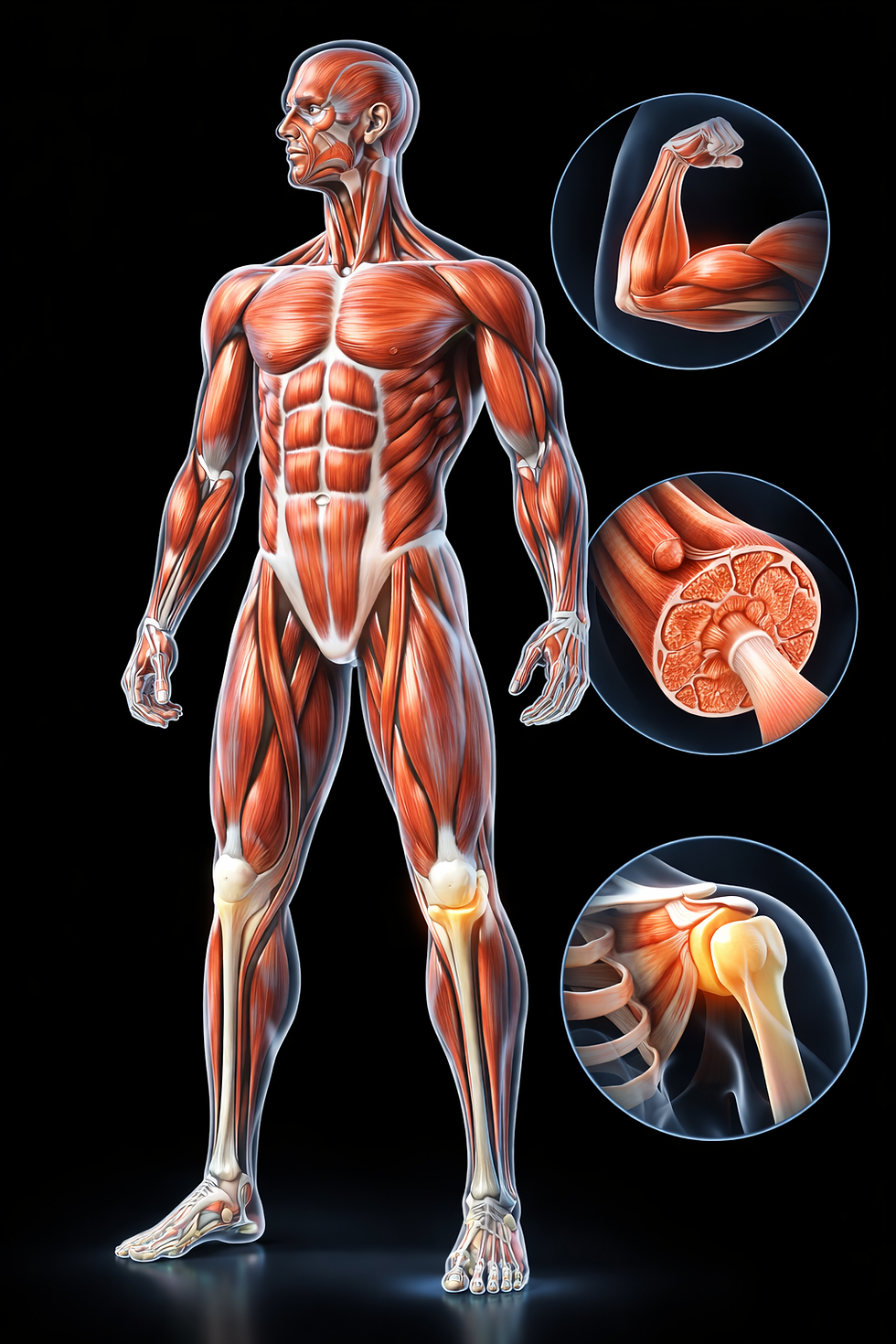
Muscular System
The muscular system is comprised of smooth muscle, cardiac muscle, and skeletal muscle. Smooth muscles provide the walls to many organs and are controlled by the autonomic nervous system (ANS).
The autonomic nervous system is the portion of the nervous system responsible for automatic functions such as some aspects of breathing, heart rate, and digestion. They are involuntary muscle actions, so we do not have to think about them for them to do their jobs. Cardiac muscle is found only in the heart and is also involuntarily regulated by the autonomic nervous system. Skeletal muscle is what we commonly think of when looking at the muscular system
It has more than 600 muscles and comprises approximately 40% of body weight. Skeletal muscle is voluntarily controlled by the central nervous system (CNS) and allows us to move. The central nervous system refers to the parts of the nervous system under intentional control such as movement and some aspects of breathing.
Physical activity directly uses our skeletal muscle to move our bodies and pursue all the benefits of movement. Any challenge to the body, even small challenges, create permutations in the musculature, our physiology, and even our mindset. A progressive means of building all these components provides substantial benefits to our quality of life.
Reflection Introduction
A reflection assignment asks you to think about and explain what you learned in a module and how that information connects to your understanding or perspective. The purpose of a reflection is not simply to repeat the material, but to show that you understand the ideas presented and can thoughtfully consider their meaning and importance.
For this assignment, write a short reflection that explains what you learned in this module and the key ideas that stood out to you. Your response should demonstrate that you engaged with the material and understand the concepts discussed. You may describe what you found interesting, surprising, or meaningful as you reviewed the lesson.
Your completed reflection should clearly show what you learned in the module and how the information contributed to your understanding of the topic. Your reflection will be shared with others in the class as part of the learning and discussion process.
