
Movement for Physical Health
Is there anything regular exercise cannot do? Research consistently shows that moving your body reduces the risk of countless diseases and dysfunctions, yet the benefits of physical activity extend far beyond prevention; developing a consistent movement habit builds resilience, boosts energy, and enhances your body’s ability to thrive.
Understanding not only the general benefits of movement but also how exercise specifically improves the body’s systems and how those systems interact is essential to supporting long-term wellness. As you explore this material, reflect on your own relationship with movement: has it felt like a chore or a source of joy, have you used it to strengthen bones, support digestion, improve metabolism, or build a healthier heart, and how does recognizing the interconnectedness of your body’s systems deepen your appreciation for the powerful role movement plays in your overall health?
Physical Activity Reduces Health Risks and Facilitates Recovery
Regular physical movement can reduce your risk of lifestyle diseases and help your body recover from stress, ease muscle and joint soreness, and elevate mood. Movement makes us feel better physically, emotionally, socially, and cognitively. There are a variety of mechanisms through which physical activity benefits your body, mind, and life experience.
One way to see the benefits of physical activity is by noting its absence. A lack of physical activity affects more than just muscles and joints. Conservative estimates believe that physical inactivity costs healthcare systems between $53.8 billion and $67.5 billion. A loss of motivation to move, resulting in inactivity, can increase the risk for cardiovascular disease and type 2 diabetes. Low physical activity has also been linked to metabolic syndrome; ovarian, colon, and endometrial cancers; depression, anxiety; stress; and low productivity.
The good news is that movement strategies to combat lifestyle-driven disease can be simple. Taking breaks from sitting for light to moderate intensity movement every 30 minutes has shown to improve glucose metabolism, increase insulin sensitivity, improve metabolic health, and lower body composition in youth and adults without decreasing their food intake. In other words, you can reap the benefits of movement outside the confines of structured exercise.


Key Benefits of Physical Activity
Regular exercise and physical activity enhance vitality, self-perception, and quality of life. Studies reveal that physical activity is associated with increased subjective vitality and an optimistic outlook on life. It has also been linked to improvements in physical function, mental health, and cognitive function. Perceived activity levels correlate with longevity, as individuals who view themselves as more active tend to live longer.
Reducing Health Risks and Aiding Recovery
Consistent physical movement reduces the risk of lifestyle diseases and supports bodily recovery from stress, muscle soreness, and low mood. Physical inactivity can lead to significant healthcare costs, with estimates ranging from $53.8 billion to $67.5 billion. Lack of movement increases the risk of cardiovascular disease, type 2 diabetes, metabolic syndrome, certain cancers, and mental health issues like depression and anxiety.

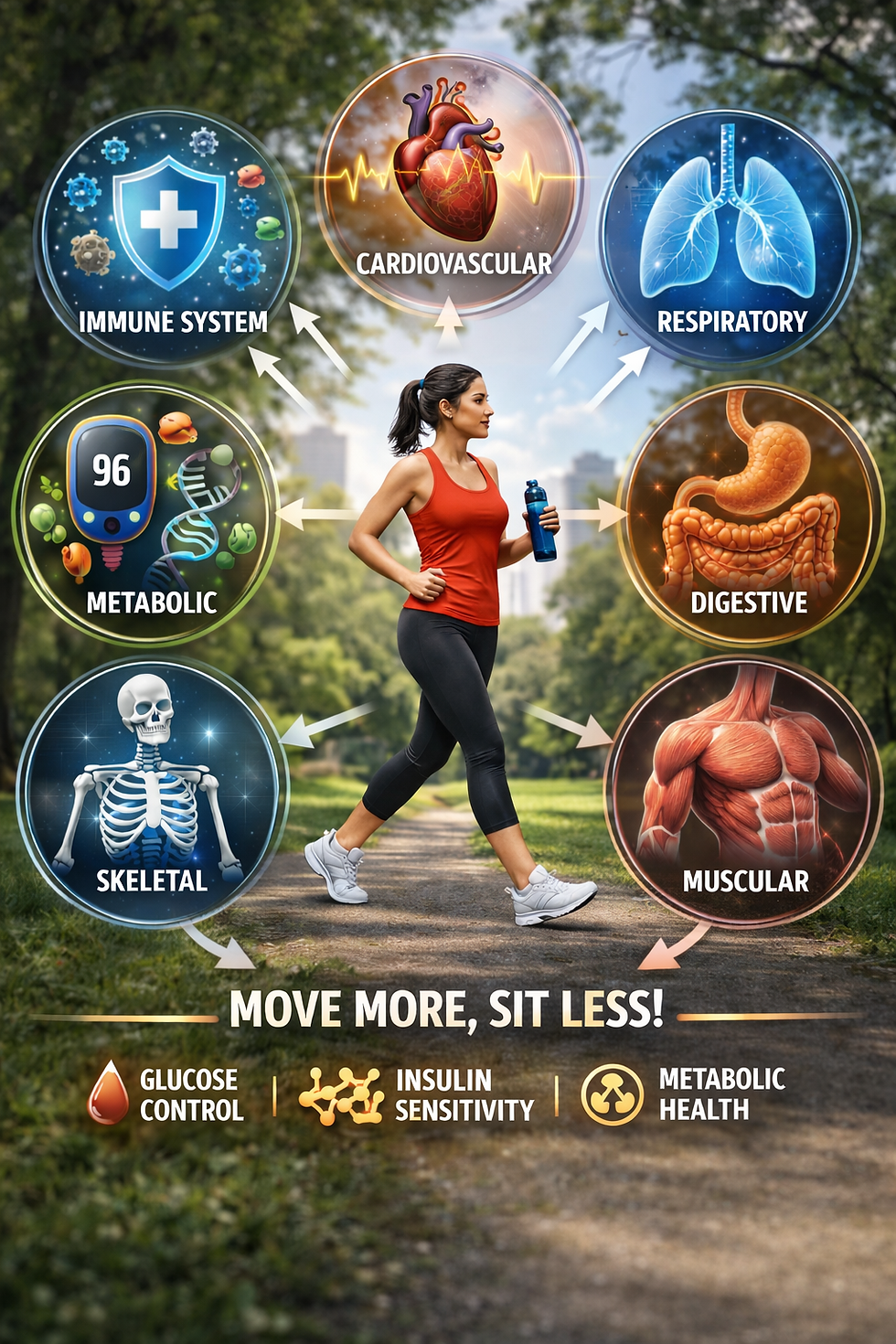
Effects on Body Systems
The importance of understanding how physical activity affects various bodily systems, including the immune, cardiovascular, respiratory, metabolic, digestive, skeletal, endocrine, and muscular systems. Regular movement, even in the form of short breaks from sitting, can improve glucose metabolism, increase insulin sensitivity, and enhance metabolic health. This highlights that the benefits of physical activity can be achieved outside structured exercise routines.
Reflection Introduction
A reflection assignment asks you to think about and explain what you learned in a module and how that information connects to your understanding or perspective. The purpose of a reflection is not simply to repeat the material, but to show that you understand the ideas presented and can thoughtfully consider their meaning and importance.
For this assignment, write a short reflection that explains what you learned in this module and the key ideas that stood out to you. Your response should demonstrate that you engaged with the material and understand the concepts discussed. You may describe what you found interesting, surprising, or meaningful as you reviewed the lesson.
Your completed reflection should clearly show what you learned in the module and how the information contributed to your understanding of the topic. Your reflection will be shared with others in the class as part of the learning and discussion process.


Physical Activity Increases Energy and Vitality
Exercise and physical activity improve vitality, self-perception, and quality of life. In a study of 250 elderly adults, physical activity was positively associated with not only subjective vitality but also provided an optimistic impression on meaning of life. Subjective vitality is a person’s perception of feeling alive and having the physical energy to pursue what they aspire toward.
A systematic review of 38 studies published between 1998 to 2010 looked at physical activity’s relationship to quality of life. Thirty-four of the studies found positive associations between quality of life and physical activity. Studies of physical activity also show a strong association between physical function, vitality, mental health, and cognitive function. In a more recent study of over 61,000 participants, those who perceived themselves as more active than their peers were likely to live longer than those who perceive themselves as less active.