
Education
Understanding the foundations of human movement empowers you to make informed, confident decisions about how you move your body. When you understand how movement works, you gain the ability to move with intention, awareness, and purpose.
Movement can be simple standing up from a chair, walking across a room, or gently contracting a muscle. It can also be complex, involving multiple joints, larger muscle groups, coordination, and dynamic control. Whether simple or advanced, every movement places specific demands on the body.
Posture and movement quality play a vital role in how efficiently and safely you move. Posture refers to the alignment of the body during both stillness and motion.
When posture is supported through balance training, resistance exercises, and intentional movement practices, the benefits extend beyond strength alone. Research shows improvements in balance, spinal alignment, fall prevention, and psychosocial well-being.
As you move through this material, consider how increased awareness of posture and movement quality can elevate not only physical performance, but your overall wellness journey.

Educating You on Movement
While as your instructor, my role is not to provide exercise instruction or design movement programs, but knowing the foundations of human movement empowers me to support you to make good choices. Some movements are as simple as standing up, walking, or tensing muscles. Other movements will involve multiple joints, larger muscle groups, and complex dynamics.
Posture and movement quality are critical to moving efficiently, minimizing potential injury or discomfort, and maximizing results. Posture is the alignment of the body during static or dynamic activities. Posture and balance exercises along with resistance exercises have proven beneficial for balance, spinal alignment, fall prevention, and psychosocial well-being.
There are five primary sections of postural alignment, these are referred to as the five kinetic chain checkpoints.
From the Top Down
From the top down:
-
The head should be upright and avoid a forward head position. Forward head position is when the head juts forward, as is often the case when using computer screens, tablets, and smartphones. The head should be pulled back to where the ears are in line with the shoulders.
-
The shoulders should be centered, neither rounded forward or squeezed together and with the shoulders falling away from the ears. The spinal area between the shoulder blades (thoracic spine) should be in a tall and upright position.
-
The lower back (lumbar spine), pelvis, and hips should be in a neutral position directly in line with the shoulders. This position can be felt as the midway point of a fully arched and fully flattened lower back.
-
The knees should be aligned with the center of the foot while the foot and ankle are in neutral positions (neither flattened nor high foot arches) with the second and third toes pointing straight ahead.
While this is not a course in posture, it is helpful to be aware of the importance of posture. If you are struggling with comfortable movement and if I am able to observe the forward head position or the inability for you to extend your knees fully, I might recommend massage, acupuncture, or working with a movement professional. Similarly, improving posture could help you who feel more powerful, confident, of comfortable in your own skin.


Exercise Basics
There is a distinct difference between movement, exercise, and physical activity. Movement is any change of position in the body, though typically health and wellness professionals refer to it in the context of changing the position of the whole body as part of a healthy, active lifestyle. Physical activities are voluntary movements that in any way increase overall energy output.
Exercise is planned physical activity that is structured and performed to produce a specific physiological outcome, such as improving health or fitness conditioning. By these definitions, getting up to stretch is movement, going for a walk in the woods is physical activity, and working with a personal trainer or taking a structured fitness class is exercise.
Exercise is a structured form of physical activity. Planned programs delivered by fitness professionals have specific goals such as building strength, improving cardiorespiratory conditioning, boosting power, or gaining flexibility. A well-designed workout program should incorporate all of these benefits while improving movement quality and reducing the risk for injuries.
I am not saying go out and join a gym, I want to open your mind to different types of training; by understanding various types of training in more detail will empower you on your wellness journey. The next section provides more information on the two most common types of training: resistance and cardiorespiratory.
Resistance Training
Resistance training is most often thought of as weight training but can also include bands, tubing, and body weight activities such as walking up or down stairs, squats, push-ups, and so on. Resistance training can be done for general fitness and overall muscle stimulation or can be designed for specific physical outcomes like greater endurance, strength, muscle growth, or increased speed and power.
Beginners can make fast gains in strength, which can be motivating and empowering. The table below shows the immediate and lasting effects of resistance training on the systems of the body. A class is offered here at the college 5 days a week.


Flexibility Training
Exercises aimed at improving pain-free range of motion around specific joints or the body as a whole.

Balance Training
Exercises to improve the body’s ability to maintain and regain equilibrium, the control of the body relating to gravity.

Plyometric Training
Exercises that combine speed and force with the intention of improving muscular power, the ability to exert significant force in a short burst.

Cardiorespiratory Training
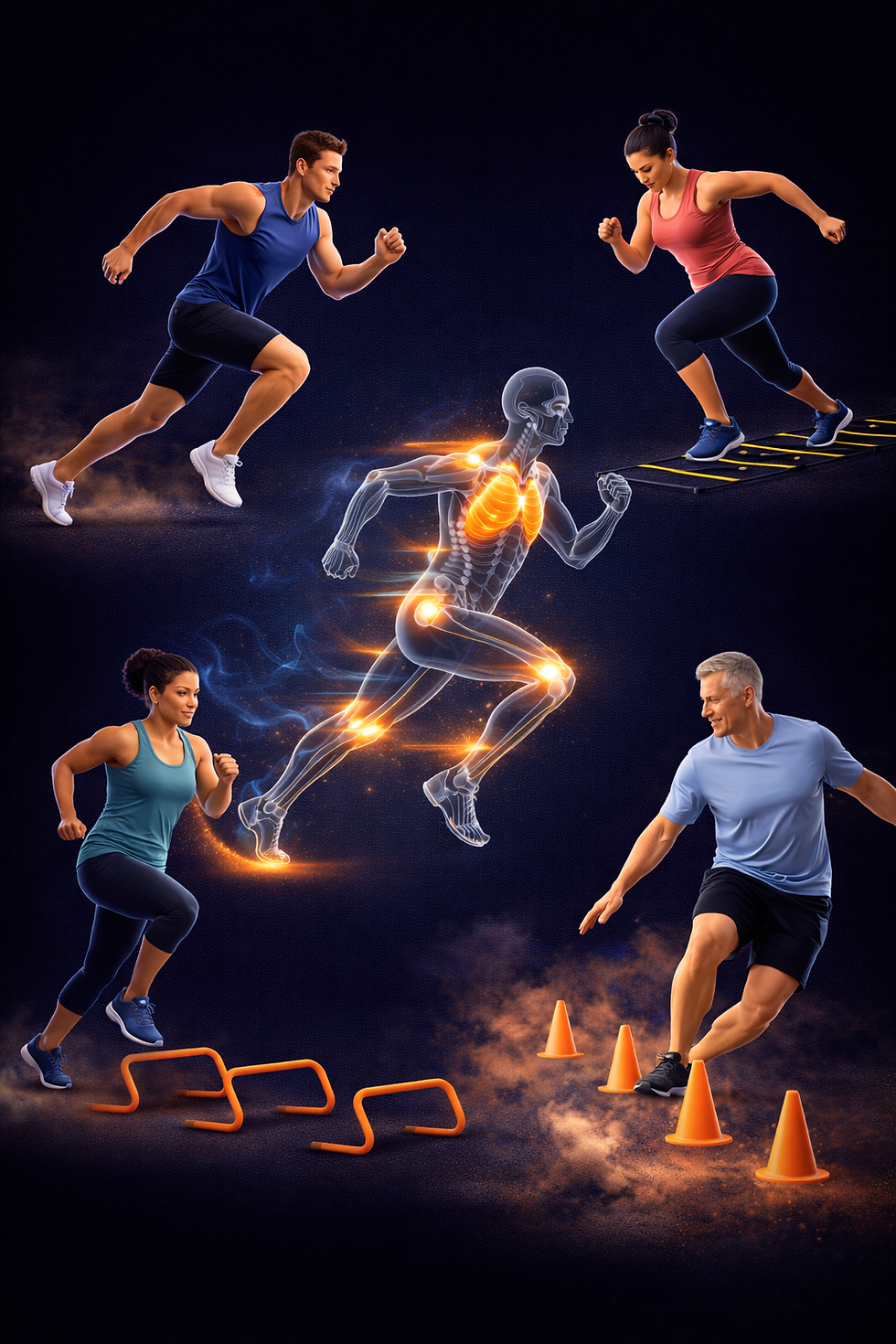
Exercises designed to improve cardiovascular and respiratory fitness, typically either through short bursts of intense activity, moderately intense activity for medium durations, or low intensity activities for longer durations.
Speed, Agility, Quickness Training
Exercises to improve reaction time and/or the ability to rapidly move parts of the body with control and coordination.

Movement Flow Training
Exercises aimed at increasing muscle strength and/or size.

Core Training
Exercises designed to improve cardiovascular and respiratory fitness, typically either through short bursts of intense activity, moderately intense activity for medium durations, or low intensity activities for longer durations.

Breathing / Respiratory Muscle Training
Breathing training is intentional, structured practice designed to improve diaphragm strength, rib cage mobility, lung efficiency, and nervous system regulation.

Movement Flow Training
Movement flow training is continuous, fluid bodyweight movement linking multiple patterns together without stopping between repetitions.
Cardiorespiratory Training
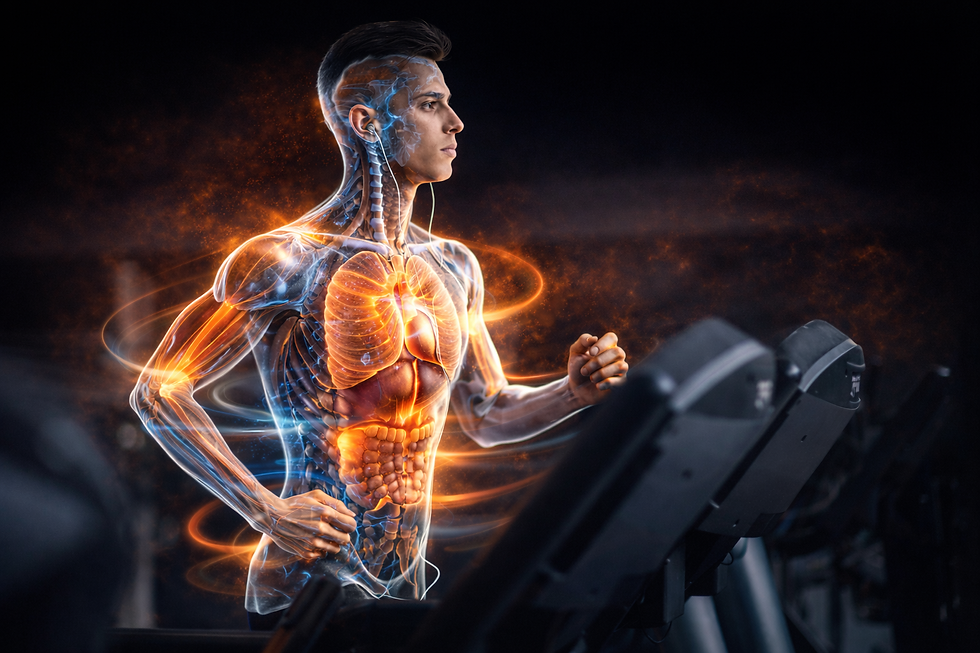
Cardiorespiratory training, often referred to as cardio, is designed to increase both heart rate and respiratory rate. This can be done through lower intensity movement, high-intensity exercise, sports, and even resistance training.
As a review, it is generally recommended to aim for 150 minutes of moderate intensity cardio or 75 minutes of vigorous cardio exercise a week.
Reflection Introduction
A reflection assignment asks you to think about and explain what you learned in a module and how that information connects to your understanding or perspective. The purpose of a reflection is not simply to repeat the material, but to show that you understand the ideas presented and can thoughtfully consider their meaning and importance.
For this assignment, write a short reflection that explains what you learned in this module and the key ideas that stood out to you. Your response should demonstrate that you engaged with the material and understand the concepts discussed. You may describe what you found interesting, surprising, or meaningful as you reviewed the lesson.
Your completed reflection should clearly show what you learned in the module and how the information contributed to your understanding of the topic. Your reflection will be shared with others in the class as part of the learning and discussion process.
